Camping Equipment Plans | A Definitive Guide to Technical Readiness
Modern wilderness engagement has moved beyond the era of improvised survival, evolving into a sophisticated discipline of mobile habitat management. The effectiveness of any venture into the backcountry is fundamentally determined by the structural integrity of one’s preparatory frameworks. To inhabit a remote environment safely and with operational efficiency requires more than a collection of high-end products; it demands an integrated strategy that accounts for thermodynamic regulation, caloric logistics, and mechanical reliability. This shift from “packing” to “provisioning” marks the difference between a reactive excursion and a proactive expedition.
Within the outdoor industry, equipment is frequently marketed as a series of disconnected solutions—a waterproof shell here, a lightweight stove there. However, a rigorous editorial lens reveals that these items function as an interdependent ecosystem. A failure in the moisture-management layer inevitably compounds into a failure of the thermal-regulation layer, regardless of the individual quality of the garments. Consequently, the development of sophisticated camping equipment plans is a prerequisite for maintaining safety margins in high-consequence environments. These plans serve as a roadmap for asset acquisition, deployment, and long-term maintenance, ensuring that the user’s “interface” with the natural world remains resilient.
As environmental patterns become increasingly volatile, the “standard” kit is no longer a viable concept. The modern practitioner must navigate a landscape of specialized materials—sil-nylon, high-fill-power down, and advanced polymers—while weighing the trade-offs between durability and mass. This article deconstructs the logic behind elite-level preparation, offering a definitive reference for building and managing a technical gear closet. By applying mental models from systems engineering and logistical planning, we can move toward a more sustainable and secure methodology for wilderness habitation.
Understanding “Camping Equipment Plans”
The concept of camping equipment plans is often oversimplified as a mere checklist of items to bring on a trip. In professional wilderness management, however, it represents a formal governance structure for a user’s technical assets. A plan is a living document that aligns hardware with specific environmental variables, physiological requirements, and duration-based constraints. The primary risk of oversimplification is “asset mismatch,” where a user deploys gear designed for a specific biome—such as the arid desert—into a temperate rainforest, leading to systemic failure of moisture management protocols.
Multi-perspective evaluation suggests that a robust plan must address three distinct layers of utility:
-
The Survival Layer: Non-negotiable assets for life support (shelter, water filtration, fire).
-
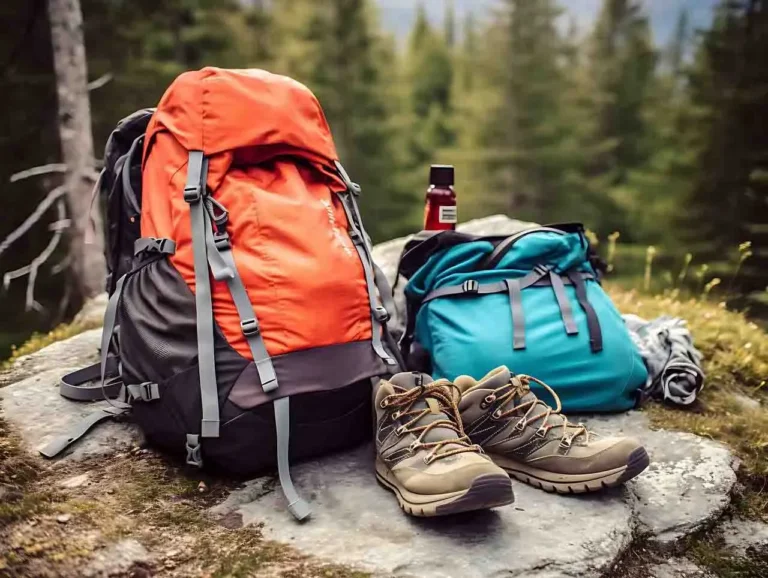
The Operational Layer: Tools that facilitate movement and communication (navigation, footwear, illumination).
-
The Recovery Layer: Systems that enable physiological restoration (sleep systems, nutrition).
A significant misunderstanding involves the “universality fallacy”—the belief that a single, high-quality kit can serve all scenarios. In reality, the best plans are modular. They utilize a core set of “tier-one” essentials while allowing for “tier-two” swaps based on the season or terrain. This modularity prevents the user from carrying unnecessary mass (the “weight penalty”) while ensuring that safety margins are never compromised. Understanding these plans requires a shift from viewing gear as consumer goods to viewing it as critical infrastructure for mobile living.
Historical Context: From Military Surplus to Technical Precision
The systemic evolution of outdoor provisioning has its roots in the logistical requirements of 19th-century military campaigns and geological surveys. Early “camping” was an exercise in extreme durability; materials like heavy canvas, wrought iron, and thick wool were the standard. The planning phase was dominated by animal-assisted transport, as the sheer mass of the equipment made solo human-powered movement nearly impossible over long distances.
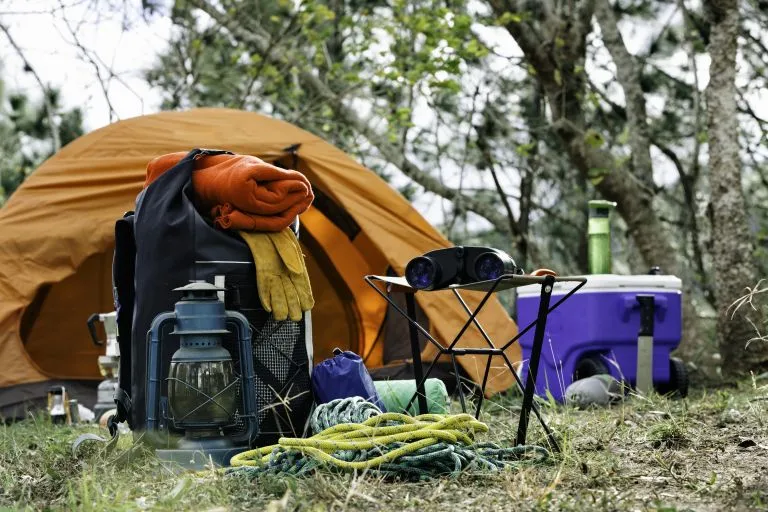
The post-WWII era catalyzed a transition toward lightweight autonomy. The introduction of aluminum alloys for tent poles and synthetic fibers like nylon for fabric allowed for a radical reduction in “base weight.” During this period, the philosophy of planning moved from “survival through mass” to “efficiency through technology.” The 1970s saw the birth of the layering system, a conceptual breakthrough that allowed individuals to regulate their own micro-climate through modular clothing rather than a single, heavy overcoat.
Today, we are in the era of “Engineering Precision.” The emergence of ultralight (UL) philosophies has forced a more disciplined approach to planning. We now utilize materials like Dyneema (UHMWPE) and advanced computational design to create shelters that weigh less than a liter of water but can withstand gale-force winds. This evolution has made the “planning” aspect more critical than ever; when gear is pushed to its technical limits for the sake of weight, the margin for error in its deployment becomes razor-thin.
Conceptual Frameworks and Mental Models
To build an effective provisioning strategy, one should employ mental models that prioritize functional logic over aesthetic appeal.
1. The Redundancy Matrix (PACE)
Adopted from tactical communications, the PACE framework ensures that critical needs have layered solutions.
-
Primary: Your main water filter (e.g., hollow-fiber membrane).
-
Alternate: Chemical treatment (e.g., chlorine dioxide tabs).
-
Contingency: Boiling (requires fuel management).
-
Emergency: A high-output signal mirror or PLB for rescue if the previous three fail.
2. The Weight-to-Caloric Ratio
This model suggests that every gram added to a pack increases the metabolic demand of the trip. A plan that reduces total pack weight by 20% effectively increases the user’s range and cognitive clarity by a similar margin. It reframes “lightweight” not as a luxury, but as a physiological advantage.
3. The “Inside-Out” Heat Management Model
This framework views the body as a heat engine. The camping kit is not “warming” the user; it is merely managing the heat the user generates.
-
Base Layer: Moisture export.
-
Mid Layer: Dead air entrapment (insulation).
-
Outer Shell: Convective heat loss prevention (wind/water block).
Key Categories of Technical Integration
Any comprehensive strategy for wilderness habitation must categorize assets by their mechanical and physiological role.
| Category | Primary Focus | Core Trade-off | Representative Material |
| Shelter System | Environmental Isolation | Mass vs. Volume | Sil-Nylon / DCF |
| Sleep System | Thermal Restoration | R-Value vs. Packed Size | 850+ FP Down / Aerogel |
| Hydration | Pathogen Exclusion | Flow Rate vs. Durability | Ceramic / Hollow Fiber |
| Propulsion | Load Carriage & Footwear | Support vs. Agility | Carbon Fiber / Vibram |
| Energy | Illumination & Comms | Battery Density vs. Reliability | Lithium-Ion / Solar |
Decision Logic: The “Worst-Case” Pivot
When selecting gear within these categories, the decision should be dictated by the “predictable worst-case scenario” of the specific environment. In the alpine, this is extreme wind and cold; in the jungle, it is 100% humidity and pathogen exposure. A plan that succeeds in the average case but fails in the worst case is a failed plan.
Detailed Real-World Scenarios
Scenario A: The High-Altitude Ridge Traverse
-
Constraints: High UV, extreme wind, no natural water sources, rocky terrain.
-
Plan Pivot: Focus on “aerodynamic” shelters (low profile) and increased water carriage capacity (4-6 liters).
-
Failure Mode: Utilizing a high-volume, “family-style” tent that acts as a sail in high winds, leading to structural collapse.
Scenario B: The Temperate Rainforest Trek
-
Constraints: Constant saturation, low solar gain, high humidity.
-
Plan Pivot: Prioritizing synthetic insulation over down (which loses loft when wet) and utilizing a “dry-bag” internal organization system.
-
Second-Order Effect: Because the gear will not dry out, the plan must include a dedicated “dry” sleep set that never leaves the shelter.
Scenario C: The Arid High-Metabolic Thru-Hike
-
Constraints: 20+ mile days, intense heat, limited shade.
-
Plan Pivot: Shifting from heavy leather boots to breathable trail runners to prevent “trench foot” from sweat accumulation.
Planning, Cost, and Resource Dynamics
The economic structure of professional outdoor gear is defined by a “High Entry, Low Maintenance” curve. While a technical kit requires a substantial initial investment, the amortized cost over 500 nights of use is often lower than frequent replacements of lower-grade items.
Resource Allocation Table (Estimates in USD)
| Kit Tier | Initial Cost | Est. Lifespan | Performance Limit |
| Generalist | $1,000 – $1,800 | 3-5 Years | Standard trails, low wind |
| Technical | $2,500 – $4,500 | 7-10 Years | Multi-day alpine, variable |
| Expedition | $6,000 – $10,000+ | 10+ Years | Extreme high-consequence |
Opportunity Cost: Choosing a cheaper, heavier sleeping bag ($150, 4lbs) over a technical quilt ($450, 1lb) saves $300 but “costs” the user 3lbs of weight. This extra weight may result in a slower pace, requiring an extra day of food and fuel, which quickly narrows the cost gap.
Tools, Strategies, and Support Systems
Executing camping equipment plans effectively requires a suite of administrative and technical support systems.
-
Digital Asset Manifests: Using platforms like LighterPack to track every gram of the kit.
-
Calibrated Kitchen Scales: Verifying manufacturer claims (which often exclude stakes, bags, or repair kits).
-
Local Knowledge Nodes: Consulting local rangers or long-term residents to identify “micro-risks” (e.g., specific minerals in the water that clog filters).
-
Field Repair Kits: A modular kit containing Tenacious Tape, sewing awls, replacement buckles, and a multi-tool.
-
DWR Maintenance Protocols: Regular cleaning and re-proofing of technical shells using specialized detergents.
-
Battery Management Logic: Standardizing all electronics to use a single charging standard (e.g., USB-C) to minimize cable weight and redundancy.
-
Water Testing Kits: In areas with industrial or agricultural runoff, mechanical filters may need to be supplemented with activated carbon.
Risk Landscape and Taxonomy of Failure
Gear failure is rarely a singular event; it is almost always a “cascade” of compounding errors. Understanding the taxonomy of these risks allows for better planning.
-
Material Fatigue: The slow degradation of waterproof coatings (hydrolysis) or the loss of “stretch” in elastic components.
-
Mechanical Failure: A snapped tent pole or a jammed stove pump.
-
User Error: Improperly pitching a tent in a windstorm or forgetting to prime a liquid-fuel stove.
-
Environmental Overmatch: When conditions exceed the design limits of the gear (e.g., a 3-season tent in a blizzard).
A robust plan identifies “Critical Paths.” For example, if your plan relies on a single GPS unit for navigation, that unit is a “Single Point of Failure.” A top-tier plan introduces a paper map and compass as a “Cold Backup.”
Governance, Maintenance, and Long-Term Adaptation
A gear system should be treated as a technical asset with a formal lifecycle. This requires a governance structure for monitoring and adjustment.
The Quarterly Audit Checklist
-
Visual Inspection: Check for delamination on rain gear and micro-tears in tent mesh.
-
Seal Integrity: Test the “slow-leak” status of inflatable sleeping pads.
-
Consumables Review: Check expiration dates on first aid supplies and fire starters.
-
Loft Restoration: Wash down items with specialized soap to remove oils and restore insulation.
Long-Term Adaptation Triggers
What causes a plan to change?
-
Physiological Shifts: Aging users may require thicker sleeping pads or more supportive footwear.
-
Regional Migration: Moving from the East Coast (wet/wooded) to the West Coast (dry/exposed) requires a total kit overhaul.
-
Technological Displacement: The transition from traditional “clunky” GPS to satellite-integrated smartphone systems.
Measurement, Tracking, and Evaluation
How do you determine if your gear plan is “Successful”?
-
Leading Indicators: Pack weight (Base Weight); R-Value margin; Caloric density of food (kcal/oz).
-
Lagging Indicators: The absence of hotspots or blisters; hours of restorative sleep achieved; amount of fuel remaining at the end of a trip.
Documentation Examples
-
The “Post-Trip Debrief”: A simple note recording gear that was carried but never used (excluding emergency items).
-
The “Snag List”: Identifying small irritants—like a zipper that catches—to be repaired before the next deployment.
-
Fuel Consumption Logs: Tracking how many grams of fuel are used per liter of water boiled at different temperatures to refine future fuel plans.
Common Misconceptions
-
Myth 1: “Military-grade” is the best. Correction: Military gear is designed for durability under extreme abuse, often at the cost of being 3x heavier than civilian technical gear. For self-supported movement, civilian gear is almost always superior.
-
Myth 2: “Waterproof” means you stay dry. Correction: In high-output activity, waterproof shells trap sweat. You get wet from the inside out. The goal is “moisture management,” not “total dryness.”
-
Myth 3: “Down is useless when wet.” Correction: While traditionally true, modern “Hydrophobic Down” treatments allow down to maintain loft significantly longer in damp conditions.
-
Myth 4: “More features = More value.” Correction: Every extra pocket, zipper, and strap is a failure point and unnecessary weight. The best gear is often the simplest.
-
Myth 5: “Cotton is okay for summer.” Correction: Cotton absorbs moisture and loses all insulating properties. Even in summer, a sweat-soaked cotton shirt during a windy evening can lead to hypothermia.
Ethical and Practical Considerations
The production of high-performance gear has a significant environmental footprint. Responsible camping equipment plans should prioritize “Circularity.” This means choosing brands that offer professional repair services, using RDS-certified (Responsible Down Standard) insulation, and avoiding PFAS (per- and polyfluoroalkyl substances) in waterproof coatings.
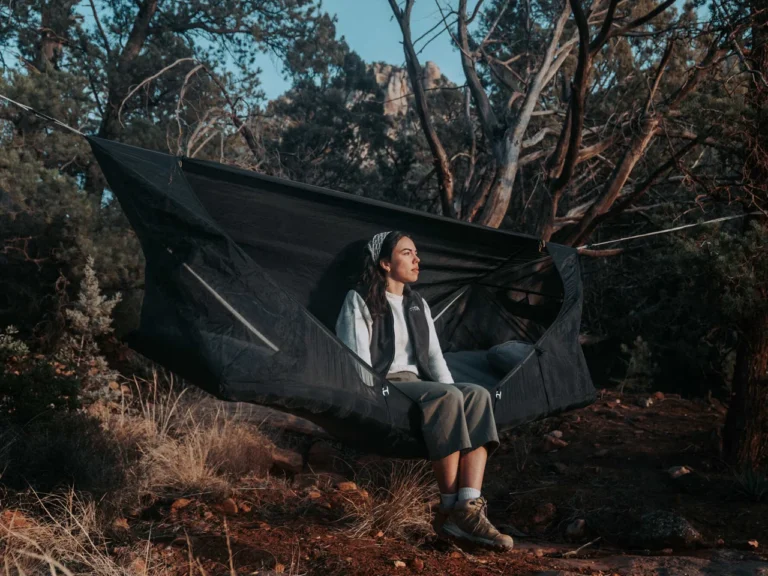
Practically, users should consider the “Leave No Trace” (LNT) impact of their gear. For example, using a hanging hammock system rather than a ground tent in sensitive alpine meadows can minimize soil compaction. Planning also involves “Noise Ethics”—choosing muted gear colors to reduce “visual pollution” in crowded wilderness areas and ensuring that high-tech stoves are as quiet as possible to maintain the acoustic integrity of the wild.
Conclusion
The transition from a recreational camper to a wilderness practitioner is defined by the depth of one’s preparation. By moving away from reactive gear acquisition and adopting a systemic approach to habituation, individuals can ensure their safety and effectiveness in the field. A camping equipment plan is not a static list; it is a disciplined methodology for managing technical assets across a lifetime of exploration. In the face of increasing environmental complexity, the quality of our systems is what allows us to engage with the wild not as intruders, but as informed and resilient inhabitants.