Best Adventure Gear in the US | Professional Editorial Guide 2026
The North American landscape presents a unique logistical challenge to the modern adventurer. Stretching from the sub-arctic tundra of the Alaskan Interior to the high-humidity subtropical zones of the Everglades, and across the arid, high-altitude rain shadows of the Sierra Nevada, the continent demands an equipment philosophy rooted in radical versatility. In this context, “best” is not a static superlative but a dynamic measurement of how a technical system manages thermodynamic flux, mechanical stress, and weight-to-utility ratios across disparate biomes. For the professional strategist, gear selection is less about brand loyalty and more about “Material Logic”—the understanding of how specific polymers, alloys, and weaves respond to environmental catalysts.
As we move into 2026, the outdoor industry has undergone a fundamental shift from the “Disposable Lightweight” era toward “Rugged Circularity.” There is a growing recognition that the most sophisticated piece of equipment is one that possesses a high “Mission Success Probability” over a multi-year lifecycle, rather than one that merely shaves grams at the expense of durability. This shift is particularly evident in the United States, where a resurgence in domestic technical manufacturing—from Vermont-knitted merino to San Francisco-engineered ballistic packs—is redefining the standards of “heirloom-quality” performance. The goal of the modern kit is no longer just to survive the trip, but to act as a reliable, adaptable extension of the human will.
Understanding “Best Adventure Gear in the US”
Defining the “best adventure gear in the us” requires a multi-perspective analysis that accounts for the continent’s geographic extremes. A common misunderstanding among recreational users is the “Universalist Fallacy”—the belief that a single high-end kit is optimized for every North American environment. In reality, a hardshell optimized for the high-wind, low-moisture environment of the Colorado Rockies will often fail in the “wet-cold” saturation of the Pacific Northwest, where vapor pressure differentials are too low for traditional breathable membranes to function effectively.

Oversimplification in gear assessment often leads to the “Weight-only Metric,” where enthusiasts prioritize ultralight specifications without accounting for the “Durability-to-Distance” ratio. In the United States, where access points are often hundreds of miles from the nearest repair node, a gear failure is not merely an inconvenience; it is a logistical crisis. Therefore, the “best” gear must be evaluated through the lens of “Systemic Resilience”—the ability of a kit to maintain its core functions (thermal regulation, hydration, navigation) even when individual components are stressed or damaged.
From an editorial perspective, the best gear in the U.S. is characterized by:
-
Regional Specificity: Designs that acknowledge the specific abrasive qualities of granite, the puncturing hazards of desert flora, or the corrosive nature of coastal salt-spray.
-
Mechanical Literacy: Equipment that is user-serviceable in the field, utilizing standard hardware or intuitive repair methodologies.
-
Modular Adaptability: The capacity for a single asset to perform multiple functions across different metabolic intensities and environmental phases.
Deep Contextual Background: The Evolution of American Exploration
The history of adventure gear in the United States is a trajectory from “Industrial Adaptation” to “Precision Engineering.” In the early 20th century, North American exploration relied heavily on repurposed military or industrial tools—heavy canvas, iron-studded leather, and forged steel. The “mistakes” of this era were largely related to the energy cost of moving such high-mass assets.
The post-war period saw the birth of the “Boutique Technical” movement in California and the Pacific Northwest. Founders of iconic American brands began by hand-forging pitons and sewing rucksacks in garages, driven by a dissatisfaction with the mass-produced equipment of the time. This era introduced the “Alpinist Ethos” to gear design: simplicity, lightness, and functional honesty. It was during this time that the U.S. became the global hub for synthetic innovation, leading to the widespread adoption of expanded polytetrafluoroethylene (ePTFE) and high-tenacity nylons.
Today, we are witnessing the “Third Wave” of American gear design: “The Digital-Material Synthesis.” Brands are now utilizing 3D-knitting, AI-modeled thermal mapping, and bio-based polymers to create equipment that responds dynamically to the user’s physiology.
Conceptual Frameworks and Mental Models
To build a professional-level kit, one must apply frameworks that prioritize objective utility over marketing narratives.
1. The Rule of Threes (The Survivability Filter)
This model dictates the hierarchy of gear importance based on physiological limits:
-
3 Minutes without Air: (Medical/Water Rescue)
-
3 Hours without Shelter: (Thermoregulation/Shelter System)
-
3 Days without Water: (Hydration/Filtration)
-
3 Weeks without Food: (Nutrition/Stove)
The “best” gear focuses its highest budget and complexity on the top two tiers.
2. The Clo-Value Equilibrium
This framework views warmth as a fluid exchange. Every layer has a “Clo” value (insulation unit).
-
The Model: Insulation (Down/Synthetic) + Barrier (Hardshell) + Transport (Base Layer).
-
The Constraint: In high-humidity US biomes (Appalachia), a high Clo-value down jacket is a liability if the barrier layer cannot effectively transport internal moisture.
3. The “Serviceability-to-Complexity” Ratio
This model assesses whether a tool can be fixed in the backcountry with a multi-tool and Tenacious Tape.
-
High Ratio: A mechanical liquid-fuel stove (Filson/MSR style).
-
Low Ratio: A highly integrated electronic GPS watch with a non-replaceable battery.
Key Categories of High-Performance Equipment
The following categories represent the current “Gold Standard” for adventure gear within the U.S. market, balancing technical innovation with field-proven reliability.
| Category | Primary Metric | Top-Tier American Examples | Key Trade-off |
| Footwear | Torsional Rigidity | Danner, Lowa (US-spec), Hoka (Technical) | Weight vs. Ankle Support |
| Packs | Load Transfer Efficiency | Osprey (Pro Series), Mystery Ranch, Gossamer Gear | Internal Frame vs. Ultralight |
| Insulation | Fill Power vs. Moisture Resistance | Western Mountaineering, Patagonia (Synthetic) | Compressibility vs. Wet-Warmth |
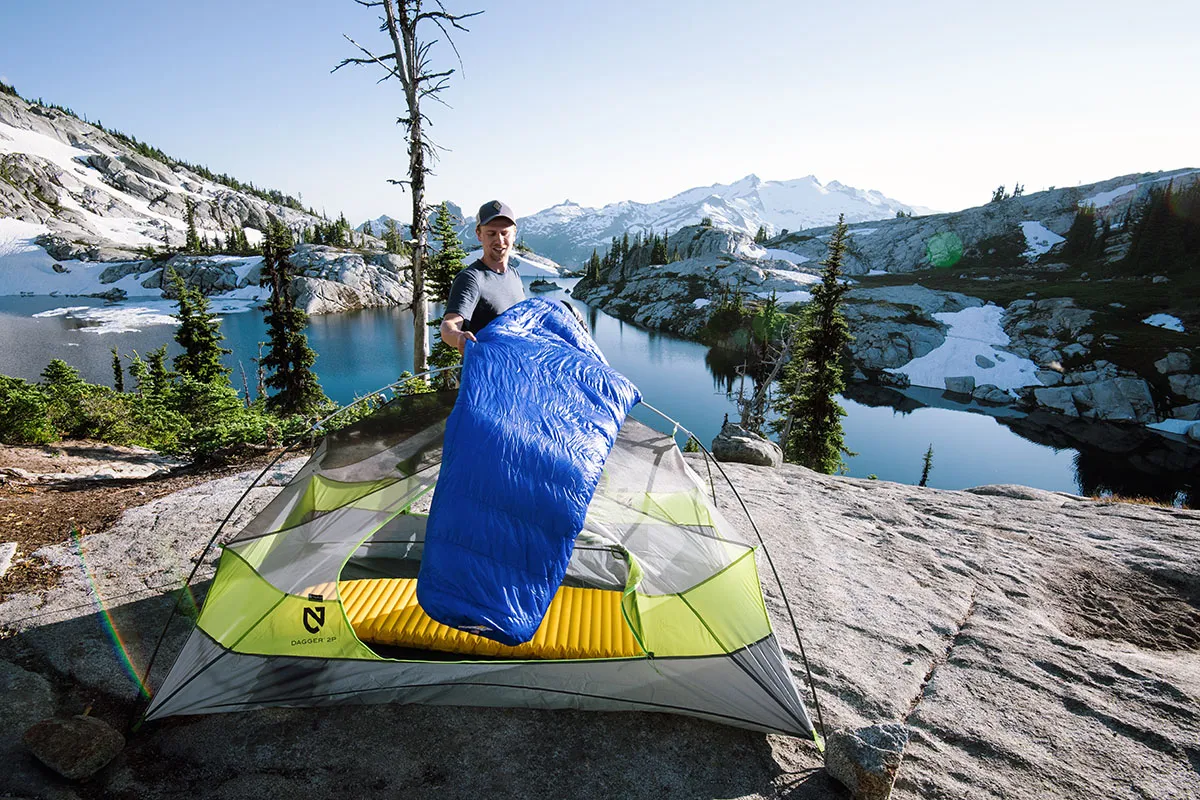
| Shelter | Static Load (Snow/Wind) Capacity | Big Agnes, Black Diamond, Hyperlite Mountain Gear | Single-wall (Venting) vs. Double-wall |
| Navigation | Signal Redundancy | Garmin (InReach), Suunto, Gaia GPS (Offline) | Battery Life vs. Screen Resolution |
| Water | Pore Size & Flow Rate | Sawyer, Katadyn, Grayl | Speed vs. Virus Protection |
Decision Logic: The “Pillar” Philosophy
When constructing a kit, the strategist identifies their “Pillar Assets”—the 3–4 items where failure is non-negotiable (typically the pack, the boots, the shelter, and the emergency communication). For these items, one should prioritize “best adventure gear in the us” based on repairability and domestic warranty support.
Detailed Real-World Scenarios
Scenario A: The High-Desert Canyon Trek (Utah/Arizona)
-
The Constraint: Extreme UV exposure, abrasive sandstone, and 40°F temperature swings.
-
The Kit: Technical sun-hoodies with UPF 50+, mechanical water filtration (avoiding hollow-fiber if silty), and high-tenacity nylon packs.
-
Failure Mode: “Sand-Ingress”—using high-mesh shoes that allow sand to act as sandpaper against the skin, leading to rapid foot failure.
Scenario B: The “Wet-Cold” Expedition (Olympic Peninsula/Cascades)
-
The Constraint: Near-100% humidity and constant 35°F rain.
-
The Kit: Synthetic “Active Insulation” (Patagonia Nano-Air or similar) and hardshells with oversized pit-zips. Down is avoided unless treated with high-level hydrophobic coatings.
-
Second-Order Effect: The weight of the gear increases by 15–20% throughout the trip due to moisture absorption, necessitating a pack with a more robust suspension system than a desert kit.
Scenario C: The Continental Divide Thru-Hike
-
The Constraint: 2,000+ miles of continuous movement; variable biomes.
-
The Kit: Modular layers, “trail-runner” style footwear for speed, and ultralight DCF (Dyneema Composite Fabric) shelters for rapid deployment.
-
Decision Point: Switching from a foam pad to an inflatable pad once the hiker moves from rocky terrain into softer forest duff to increase recovery sleep quality.
Planning, Cost, and Resource Dynamics
The acquisition of professional-grade gear is a significant capital outlay. However, the true cost of an asset is measured as:
Estimated Asset Lifecycle Costs (Professional Grade)
| Item | Initial Investment | Expected Lifespan (Days) | True Daily Cost |
| Premium Tent | $600 – $850 | 250 | $2.40 – $3.40 |
| Leather Boots | $350 – $450 | 400 (if resolable) | $0.88 – $1.12 |
| GPS Messenger | $400 + Sub | 1,000 | $0.40 + Service |
| Down Sleeping Bag | $550 – $750 | 500+ (with care) | $1.10 – $1.50 |
Opportunity Cost of Bulk: In the U.S., many “budget” options are 200–300% bulkier than professional gear. This forces the traveler to use a larger vehicle, pay for checked bags on regional flights, and expend more calories on trail. High-quality, compact gear often pays for itself in reduced logistics and transportation friction over a 2-year period.
Advanced Tools and Support Systems
The “best adventure gear in the us” is supported by an ecosystem of digital and physical services that ensure long-term utility.
-
Direct Repair Programs: (e.g., Patagonia Worn Wear, Osprey All-Mighty Guarantee). These are critical for U.S.-based adventurers, allowing for hardware restoration without total replacement.
-
ASTM Thermal Manikin Testing: Utilizing independent data (like the R-value standards for sleeping pads) to compare insulation across brands objectively.
-
Dyneema (DCF) Laminates: The current “Peak Material” for shelters and packs, offering zero-stretch and 100% waterproofness at half the weight of sil-nylon.
-
Satellite Constellation Redundancy: Utilizing devices that can toggle between Iridium and Starlink (emerging in 2026) for 100% global coverage.
-
Biometric Thermal Mapping: Smart-base layers that track skin temperature and alert the user to early-stage hypothermia or heatstroke.
-
The “Garage Grown” Ecosystem: Small-scale U.S. cottage manufacturers (Zpacks, Enlightened Equipment) that offer hyper-specialized gear that larger brands cannot produce at scale.
Risk Landscape and Failure Modes
The “Best Gear” can still fail if it is subjected to “Out-of-Envelope” stressors.
-
UV Degradation: A $900 DCF tent left in the high-altitude sun of the Sierras for 30 days straight will suffer a 40% loss in tear strength.
-
Chemical Contamination: DEET-based insect repellents can melt the synthetic membranes in $600 hardshells and damage tent coatings.
-
Compounding Fatigue: Using a “minimalist” pack for a load it wasn’t designed for leads to shoulder-strap failure—a catastrophic event if the user is 50 miles from a trailhead.
The Golden Rule of Redundancy: Never have your “Survival” depends on an item that requires a battery, unless you have a mechanical (analog) backup.
Governance, Maintenance, and Long-Term Adaptation
Treating your equipment as a “managed asset” extends its life and reliability.
The Annual Review Cycle
-
Q1 (Preparation): Deep-clean DWR (Durable Water Repellent) coatings using technical washes to restore breathability.
-
Q2 (Active Use): Field-testing and logging minor tears or hardware stiffness.
-
Q3 (Audit): Assessing which gear “underperformed” in specific U.S. biomes.
-
Q4 (Storage): Inspecting for mildew and storing down insulation in “loft bags” to prevent permanent cluster collapse.
Measurement, Tracking, and Evaluation
How do you measure if you have the “best adventure gear in the us”?
-
Leading Indicators: Percentage of pack weight to body weight (target <20%); “First-Pass” success rate of water filtration systems; recovery heart rate after sleep (indicating sleep system quality).
-
Lagging Indicators: Total repair costs per year; number of “aborted” missions due to gear failure; “Resale Value” on the secondary market (a proxy for durability).
Documentation Examples
-
The “Kit Manifest”: A living document (spreadsheet) tracking the weight and age of every item.
-
The “Failure Log”: Recording every buckle that broke, zipper that snagged, or seam that leaked, categorized by environment.
Common Misconceptions and Oversimplifications
-
Myth: “American-made is always better.” Correction: Domestic manufacturing excels in heavy-duty sewing and knitwear (socks/packs), but European and Asian factories currently lead in complex seam-taping and ultra-thin hardshell lamination.
-
Myth: “The military uses the best gear.” Correction: Military gear is designed for a “lowest-common-denominator” durability and cost. It is almost always too heavy and poorly ventilated for high-intensity civilian adventure.
-
Myth: “Gore-Tex is the only waterproof option.” Correction: Many proprietary membranes (and non-porous options like DCF) outperform the “big name” brands in specific U.S. micro-climates.
-
Myth: “You need 4-season gear for winter.” Correction: In many parts of the Southern US, “3-season” gear with a modular insulation boost is lighter and more versatile than specialized winter gear.
-
Myth: “Boots must be leather to be durable.” Correction: Modern synthetic overlays (Kevlar/TPU) can match leather’s abrasion resistance while drying 400% faster.
-
Myth: “Expensive gear makes you safer.” Correction: Skill is the primary safety asset; gear is merely a multiplier. High-end gear in the hands of an untrained user creates a “Safety Illusion.”
Ethical and Practical Considerations
In 2026, the “best” gear must also be “Ethical Gear.”
-
PFAS-Free Chemistry: The U.S. market is transitioning away from “Forever Chemicals” in waterproof coatings. The “best” gear now utilizes bio-based or mechanical DWR.
-
Labor Transparency: Professional users are increasingly prioritizing brands that provide “Traceable Supply Chains,” ensuring that high-performance doesn’t come at the cost of human exploitation.
-
The “Secondhand Market” Factor: A high-quality American-made pack holds 60–70% of its value. Buying used gear is not just a budget strategy; it is a sustainability strategy that keeps high-mass technical waste out of landfills.
Conclusion
The landscape of professional equipment in North America is no longer a collection of static products, but a sophisticated, evolving ecosystem of materials and logic. Finding the “best adventure gear in the us” requires a move away from consumer-driven “newness” toward a strategy of “Operational Excellence.” It is about selecting tools that respect the laws of thermodynamics, the physics of weight distribution, and the brutal reality of the American wilderness.
Whether you are navigating the temperate rainforests of the Northwest or the high-plateaus of the Southwest, your gear should be a transparent interface between you and the world—a silent, resilient partner in the pursuit of the horizon.