Best Adventure Gear for Beginners | The Definitive Systemic Guide
The transition from a casual observer of the outdoors to an active participant is often mediated by a single, formidable barrier: the acquisition of equipment. For the uninitiated, the marketplace presents a bewildering array of technical specifications—denier counts, hydrostatic heads, and R-values—that can easily lead to “analysis paralysis” or, more commonly, the “over-spec” trap. True mastery of the outdoors does not begin at the trailhead, but in the deliberate, systemic selection of tools that align with one’s physiological needs and environmental constraints.
A common pitfall is viewing gear as a collection of isolated purchases rather than a cohesive “life-support system.” Every item carried in a pack has a metabolic cost; every gram requires a specific amount of oxygen and caloric burn to transport. Therefore, the best adventure gear for beginners is not necessarily the most expensive or the most durable, but the most “efficient”—gear that provides the highest safety and comfort margin for the lowest weight and complexity. As we enter an era of unprecedented textile innovation and shifting climate patterns, the logic of “buy once, cry once” must be balanced with the reality of a beginner’s evolving skill set.
This article serves as a definitive reference for those seeking to build a resilient, high-performance kit from the ground up. It moves beyond the typical gear list to explore the underlying mental models, historical context, and risk taxonomies that define professional-level readiness. By treating equipment as a depreciating technical asset rather than a consumer lifestyle product, the beginner can establish a foundation that is both fiscally responsible and operationally sound.
Understanding “Best Adventure Gear for Beginners”
The phrase “best adventure gear for beginners” is frequently misinterpreted as a search for “cheap” or “entry-level” products. In an editorial and professional context, this is a dangerous oversimplification. “Best” in this domain refers to a specific intersection of usability, reliability, and “forgiveness.” A beginner needs gear that is intuitive to operate under stress—stoves that don’t require complex priming, tents with color-coded poles, and navigation tools that function without a cellular signal.
Oversimplification risks in the beginner market often manifest as “Aspirational Purchasing.” Many newcomers buy equipment designed for Himalayan expeditions or technical alpine climbing when their actual use case is weekend hiking in temperate forests. This leads to gear that is over-built, over-heavy, and functionally mismatched to the user’s current environment. The best adventure gear for beginners is modular; it should perform well in 80% of likely scenarios while allowing for specialized additions as the user moves into the remaining 20% of extreme conditions.
Furthermore, a “beginner” is not a monolith. A beginner who is an experienced athlete will have different thermal and metabolic needs than a beginner who is sedentary. A truly “top” gear plan accounts for these physiological variances. The goal is to create a “forgiving system”—one where a minor mistake, such as an improperly pitched tarp or a forgotten mid-layer, does not immediately escalate into a survival situation.
Deep Contextual Background: The Evolution of Portability
The history of adventure gear is a narrative of “Weight-to-Utility” optimization. In the early 20th century, the “best” gear was defined by ruggedness. Explorers like George Mallory relied on heavy wool, gabardine, and leather. These materials were durable but possessed high “moisture-retention” risks; once wet, they became massive heat sinks, leading to rapid exhaustion.
The “Synthetic Revolution” of the 1960s and 70s introduced Nylon and polyester, which fundamentally changed the safety profile of the outdoors. Suddenly, a shelter that once weighed 20 lbs could be replaced by a 4-lb tent. The 1990s brought the “Breathable Membrane” era (Gore-Tex and its competitors), which promised the “Holy Grail” of staying dry from both rain and sweat.
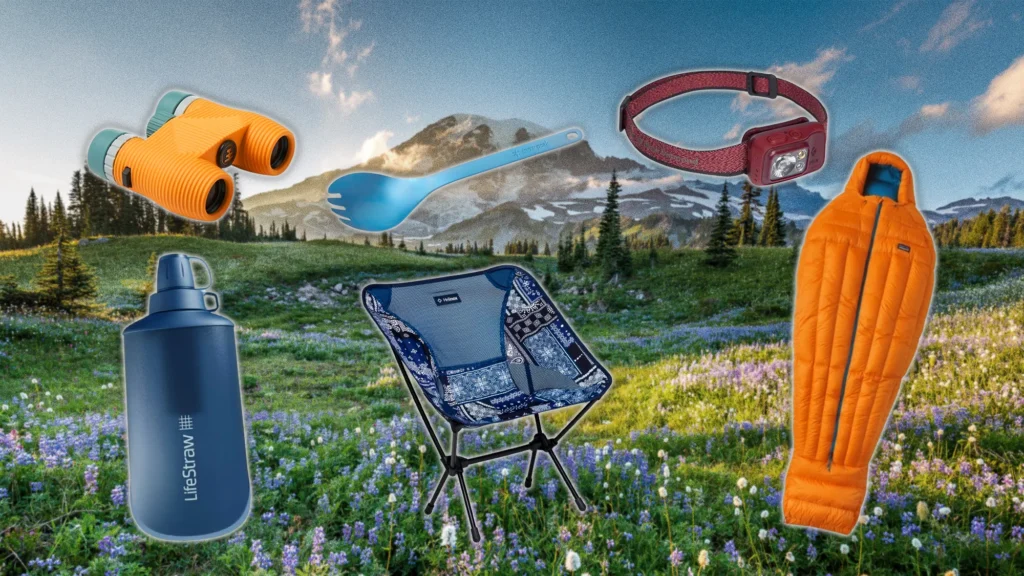
Today, we are in the “Ultralight Integration” phase. Modern gear planning utilizes data-driven fabrics like Dyneema Composite Fabric (DCF) and advanced 3D-mapped insulation. A “full-kit” weight that would have broken the back of a 1950s hiker is now achievable for a teenager. This shift has changed the primary skill of the adventurer from “load-carrying” to “system-management.”
Conceptual Frameworks and Mental Models
To evaluate equipment effectively, one must employ frameworks that filter out marketing hype.
1. The Three-Layer Physiological System
The body is a heat engine. Gear is simply a method of managing that engine’s exhaust (sweat) and fuel (calories).
-
Base Layer: Wicks moisture (Management).
-
Mid Layer: Traps air (Insulation).
-
Outer Shell: Blocks wind/rain (Protection).
2. The “Point of Failure” Taxonomy
Identify which items, if they fail, result in “Game Over.”
-
Critical: Water filtration, shelter, fire starter.
-
Functional: Trekking poles, luxury camp chair, specialized camera bag.
A beginner’s budget should always be weighted 70/30 toward the Critical category.
3. The PACE Model (Primary, Alternate, Contingency, Emergency)
Derived from military communications, this applies to survival essentials like navigation or light.
-
Primary: GPS watch/Smartphone.
-
Alternate: Physical map and compass.
-
Contingency: A small signal mirror.
-
Emergency: A Personal Locator Beacon (PLB).
Key Categories of Technical Integration
A beginner’s gear system can be broken down into functional silos. The key is ensuring these silos “speak” to each other (e.g., your sleeping pad must fit inside your tent).
| Category | Primary Focus | Critical Trade-off |
| Shelter System | Protection from elements | Weight vs. Interior Volume |
| Sleep System | Recovery/Insulation | R-Value vs. Packed Size |
| Hydration/Nutrition | Fueling and Safety | Speed vs. Reliability |
| Apparel System | Micro-climate control | Breathability vs. Durability |
| Navigation/Comms | Situational Awareness | Battery Life vs. Feature Set |
The “Silo” Logic
Beginners often focus on “The Big Three” (Tent, Pack, Sleeping Bag) but ignore the “Small Essentials.” A $1,000 tent is useless if you don’t have a reliable method to treat water or a headlamp to find your way in the dark. The best adventure gear for beginners distributes quality across the entire system.
Detailed Real-World Scenarios
Scenario A: The Surprise High-Wind Descent
-
The Setup: A beginner reaches a ridge line as a front moves in. Wind speeds hit 40 mph.
-
The Gear Test: Does the hardshell have a “helmet-compatible” hood that won’t blow off?
-
Failure Mode: A “fashion-first” raincoat that lacks a brim or cinch cords, leading to water ingress at the neck.
Scenario B: The “Wet-Cold” 40°F Night
-
The Setup: Temperatures are just above freezing, but the air is 100% saturated.
-
The Gear Test: Synthetic vs. Down insulation. In high humidity, “treated” down or synthetic fills maintain loft better than untreated down.
-
Second-Order Effect: Condensation on the inside of the tent walls. A double-walled tent (separate mesh and fly) prevents this moisture from dripping onto the sleeping bag.
Scenario C: The “Empty-Tank” Return
-
The Setup: The beginner has underestimated the trail’s vertical gain and is 3 miles from the trailhead at sunset.
-
The Gear Test: High-lumen headlamp with a “red light” mode (to preserve night vision) and a high-calorie “emergency” food stash.
Planning, Cost, and Resource Dynamics
The economic reality of the outdoors is that “Light is Expensive.” As weight goes down, the price of materials (Titanium, Dyneema, High-Fill-Power Down) goes up exponentially.
The Value-to-Weight Table
| Tier | Weight Profile | Typical Cost (Full Kit) | Best For |
| Budget/Entry | 30 – 45 lbs | $500 – $800 | Weekend car camping |
| Mid-Range | 20 – 28 lbs | $1,200 – $2,000 | Thru-hiking, multi-day |
| Elite/UL | 8 – 15 lbs | $3,500+ | Fast-packing, mountain marathons |
The Opportunity Cost of Bulk: A beginner who buys a bulky, $50 sleeping bag will be forced to buy a larger, heavier 75L backpack to carry it. This increases the physical strain and risk of injury, essentially “costing” the user their enjoyment and longevity in the sport.
Tools, Strategies, and Support Systems
To manage a gear system, the beginner needs more than just the gear itself; they need a “maintenance infrastructure.”
-
LighterPack.com: A digital tool for tracking the weight of every item.
-
Calibrated Kitchen Scale: Manufacturers often lie about “minimum trail weight.” Weigh everything yourself.
-
Tenacious Tape: The “duct tape” of the technical gear world. Essential for field repairs of tents and puffy jackets.
-
Nikwax/Grangers: Specialized detergents for maintaining the DWR (Durable Water Repellent) coating on shells.
-
Offline Map Apps: (e.g., Gaia GPS or AllTrails) with downloaded base maps.
-
The “Shakedown” Hikes: Testing gear in a controlled environment (like a backyard) before a “consequence” trip.
Risk Landscape and Taxonomy of Failure
Gear failure is rarely binary; it is usually a “cascade.”
-
Material Failure: A snapped tent pole or a torn sleeping pad.
-
Logistical Failure: Running out of fuel because of high winds (which increases cooking time).
-
Knowledge Failure: Having the gear but not knowing how to use it (e.g., not knowing how to use a compass’s declination adjustment).
-
Compounding Risk: When a small failure (wet socks) leads to a larger one (blisters), which leads to a slow pace, which leads to being caught out after dark.
Governance, Maintenance, and Long-Term Adaptation
A gear kit should be governed like a professional asset.
The “Season-End” Review
-
Clean and Reproof: Wash all technical garments and reapplyDWR.
-
Inspect Seals: Check the seam tape on tents and rain jackets for “flaking.”
-
Battery Management: Remove batteries from headlamps to prevent corrosion during storage.
-
Loft Check: Ensure sleeping bags are stored loosely in large mesh bags, not compressed.
Adaptation Triggers
When should you upgrade?
-
Physical Change: Weight loss or gain that changes clothing fit.
-
Skill Advancement: Moving from established trails to “off-trail” navigation requires more rugged footwear and better mapping tools.
-
Technological Shift: The transition from “rechargeable” to “solar-integrated” systems.
Measurement, Tracking, and Evaluation
How do you know if you have the “best” gear for your needs?
-
Leading Indicators: You feel “prepared” when looking at the weather forecast; your pack weight allows you to maintain a 2 mph pace uphill.
-
Lagging Indicators: The number of “hotspots” on your feet at the end of a day; the amount of fuel left in your canister.
Documentation Examples
-
The “Snag List”: A small notebook to record gear that annoyed you or didn’t perform as expected.
-
The “Consumables Log”: Exactly how much water and food did you actually use? Use this to refine the “weight-to-utility” ratio of your next trip.
Common Misconceptions
-
Myth: “Boots must be heavy to provide support.” Correction: Modern trail runners with “rock plates” provide sufficient support for most beginners while weighing 60% less.
-
Myth: “Cotton is okay in summer.” Correction: Cotton is a “death fabric” in the outdoors; it absorbs sweat and loses all insulating properties, even in 70°F weather if the wind picks up.
-
Myth: “The most expensive gear is the safest.” Correction: The safest gear is the gear you have practiced with. A $10 Mora knife in the hands of an expert is safer than a $400 survival knife in the hands of a novice.
-
Myth: “You need a knife for everything.” Correction: Most modern hikers use their “multi-tool” pliers or scissors far more than a 5-inch blade.
-
Myth: “Waterproof means you won’t get wet.” Correction: High-intensity activity in a rain jacket creates a “trash bag effect” where you get wet from your own sweat. The goal is “moisture management,” not “total dryness.”
Ethical and Practical Considerations
The “best” gear is also the most ethical. Beginners should look for:
-
PFC-Free DWR: Avoiding “forever chemicals.”
-
RDS-Certified Down: Ensuring no live-plucking of birds.
-
Recycled Content: Brands like Patagonia or Nemo that utilize ocean plastics.
-
Repairability: Choosing brands that offer a lifetime repair service (e.g., Osprey’s “All Mighty Guarantee”).
Conclusion
Building the best adventure gear for beginners is an iterative process that requires humility and analytical rigor. It is not about reaching a final “perfect” state, but about creating a system that evolves with your skills and the environments you choose to explore. By prioritizing modularity, reliability, and physiological efficiency over aesthetic trends, the beginner transforms from a consumer of the outdoors into a steward of their own safety. The wilderness is an unforgiving laboratory; your gear is the infrastructure that allows you to conduct your experiments safely.