Adventure Destinations USA: The Definitive Editorial Guide to High-Tier Wilderness
Adventure destinations usa. The concept of adventure within the United States has undergone a fundamental structural transformation, evolving from the 19th-century ethos of conquest and extraction toward a modern framework of specialized environmental engagement. Across nearly four million square miles, the American landscape offers a geological and climatic breadth—from the high-latitude tundra of Alaska to the subtropical mangroves of Florida—that few other nations can replicate within a single sovereign border. This vastness, however, creates a logistical and intellectual paradox: the sheer volume of accessible wilderness requires a sophisticated level of discernment to identify experiences that provide true “topical integrity” rather than mere recreational novelty.
In the contemporary era, the pursuit of adventure is increasingly defined by the intersection of technical proficiency and ecological literacy. It is no longer sufficient to view a destination through the lens of a “bucket list” or a static itinerary. This article serves as an analytical reference for navigating these complexities, deconstructing the mechanisms that elevate a location from a standard tourist site to a definitive arena for high-level wilderness interaction.
Furthermore, the American adventure sector is currently grappling with the consequences of its own accessibility. The democratization of the outdoors, facilitated by digital mapping and social connectivity, has placed unprecedented stress on fragile ecosystems. Consequently, the most profound experiences are often found at the “margins”—in the temporal windows between peak seasons, or in the transition zones between well-trodden trails and the true backcountry. To master these environments is to adopt a senior editorial perspective on the land itself, recognizing that the most valuable “adventure destinations usa” are those where the challenge is as much intellectual and logistical as it is physical.
Understanding “Adventure Destinations USA”
To accurately define the scope of adventure destinations usa, one must move beyond the surface-level marketing of state tourism boards and focus on “High Fidelity” environments. In a professional editorial context, an adventure destination is not merely a place where one can perform an outdoor activity; it is a specific geographic coordinate where the terrain, the climate, and the isolation converge to create a high-stakes encounter with the natural world. This definition excludes “managed” experiences—such as commercial zip-line parks or roadside scenic overlooks—where the risk and the requirement for technical judgment have been removed by infrastructure.
A critical misunderstanding among casual travelers is the conflation of “scenic beauty” with “adventure quality.” A location can be visually spectacular while offering zero technical challenge or intellectual depth. Conversely, some of the most rigorous and rewarding environments in the United States—such as the dense, humid brush of the Southern Appalachians or the repetitive, wind-scoured plains of the High Steppe—may appear aesthetically “plain” to the untrained eye. The oversimplification risk lies in prioritizing visual “capture” over systemic “immersion.”
The American perspective on adventure is also uniquely tied to the concept of “Public Trust.” Because the majority of high-tier destinations are situated on federal land (National Parks, Forest Service land, or BLM tracts), the experience is governed by a set of rules that prioritize the preservation of “Wildness” over the convenience of the user. This creates a friction-filled environment: you cannot simply go where you want, when you want. You must navigate permit lotteries, seasonal closures, and “Leave No Trace” mandates.
Deep Contextual Background
The lineage of the American adventure landscape is a story of shifting utility. This era established the physical “Hardware” of our current trail systems—many of our most iconic hiking and climbing routes follow the exact paths of 19th-century surveyors and indigenous trade networks.
The systemic shift toward “Adventure as Preservation” began in the late 19th century with the establishment of Yellowstone (1872) and the subsequent rise of the Sierra Club. This was the “Romantic Era” of the American outdoors, where the wilderness was reimagined as a spiritual cathedral. However, the modern “Adventure Era” as we know it today—characterized by technical gear and specialized disciplines—is a post-WWII phenomenon. The surplus of mountain-warfare equipment and the rise of the American middle class created a surge in vertical and horizontal exploration.
Today, we are in a phase of “Bureaucratic Maturation.” The evolution has moved from Exploration (can we get there?) to Occupation (can we stay there?) to Preservation (should we be there at all?). This historical trajectory informs every decision a modern adventurer makes when selecting a destination.
Conceptual Frameworks and Mental Models
Navigating the vastness of the American continent requires specific mental models to ensure that the chosen destination aligns with both the desired challenge and the environmental reality.
The “Ecological Gradient” Framework
This model assesses a destination based on its distance from human infrastructure.
-
Front-country: Immediate access to emergency services and cell signal.
-
Back-country: 4–24 hours from the nearest road-head; reliance on internal supplies.
-
Deep-wilderness: Locations like the Brooks Range in Alaska or the Gila Wilderness in New Mexico, where rescue is measured in days, not hours.
The sophisticated adventurer understands that their gear and skill set must scale proportionally with this gradient.
The “Temporal Window” Logic
Unlike static tourist sites, adventure destinations are “Temporary Biomes.” A peak in the White Mountains of New Hampshire is a world-class ice-climbing destination in February but a humid, bug-infested bog in July. This model requires the practitioner to view the map as a four-dimensional object, where “Timing” is as important as “Location.”
The “Failure Mode” Taxonomy
When selecting a destination, one must analyze how the environment typically “fails” its visitors. In the Pacific Northwest, the failure mode is “Moisture/Hypothermia.” In the Southwest, it is “Heat/Dehydration.” In the Rockies, it is “Altitude/Lightning.” By identifying the primary failure mode of a destination, the adventurer can build a support system specifically designed to mitigate that exact risk.
Key Categories: From Alpine Corridors to Arid Silences
The American landscape can be divided into distinct bioregions, each offering a unique “Texture” of adventure.
Comparison of Primary Adventure Bioregions
| Bioregion | Example Destination | Primary Discipline | Key Constraint |
| High Alpine | Grand Tetons, WY | Mountaineering / Climbing | Rapid Weather Change |
| High Desert | Moab, UT | Canyoneering / MTB | Water Scarcity |
| Coastal Temperate | Olympic Peninsula, WA | Through-hiking / Pack-rafting | Dense Vegetation / Mud |
| Boreal / Arctic | Gates of the Arctic, AK | Expeditionary Travel | Total Isolation |
| Karst / Cave | Mammoth Cave, KY | Speleology | Light Dependency |
| Riverine | Grand Canyon, AZ | Whitewater Rafting | Logistical Permitting |
The High Alpine: The Vertical Frontier
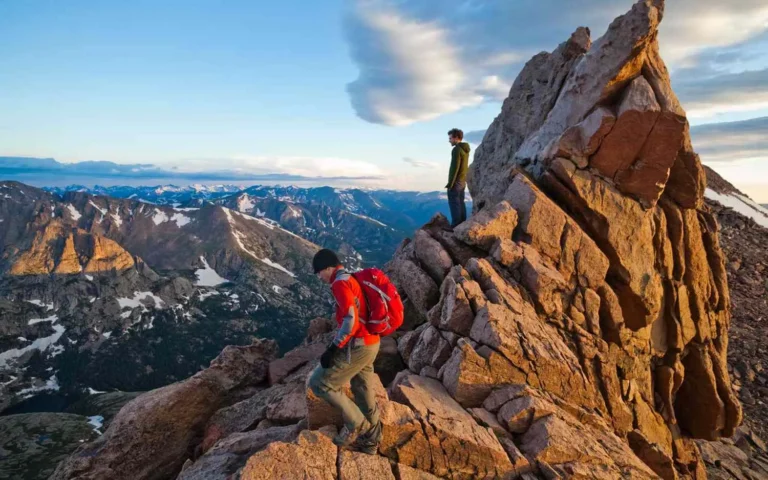
In the United States, the “High Alpine” is defined by the treeline. Destinations like the Sierra Nevada or the North Cascades provide a “Granite Clarity” that is world-renowned. The adventure here is found in the “Approach”—the often-punishing movement through dense forest to reach the high-altitude glaciers and ridges. The trade-off is the extreme vulnerability to the “2:00 PM Lightning Rule,” a meteorological reality of the American West.
Arid Canyons: The Architecture of Erasure
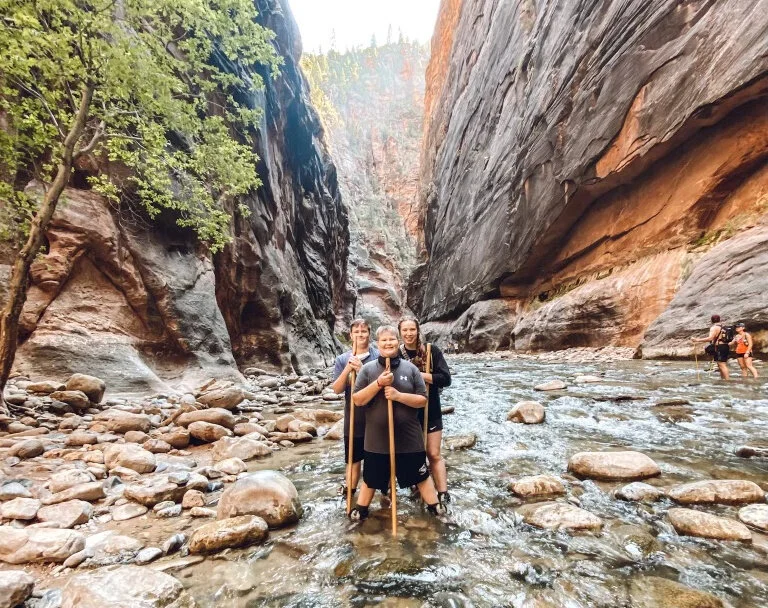
The Desert Southwest is perhaps the most “American” of adventure landscapes. Here, the challenge is navigational and biological. The topography is “Inverted”—the most interesting features are below the horizon line in slot canyons. The failure mode is often “Flash Flooding,” where a storm twenty miles away can turn a dry wash into a lethal torrent. This requires a level of “Hydraulic Literacy” that few other destinations demand.
Detailed Real-World Scenarios
Scenario 1: The “Goldilocks” Window in the High Sierra
-
Constraint: A hiker seeks to cross a high pass in July.
-
Decision Point: A record-high winter snowpack has delayed the melt.
-
Second-Order Effect: Without crampons and an ice axe, the “easy” hiking trail becomes a technical mountaineering route. The failure to adapt to the “Snow-Year” cycle leads to a retreat or an injury. This illustrates the “Variable Difficulty” of American peaks.
Scenario 2: The Alaskan “Bush Plane” Drop
-
Constraint: A 10-day rafting trip on the Kongakut River.
-
Failure Mode: The pilot cannot return for pickup due to 48 hours of dense coastal fog.
-
Outcome: The team must transition to “Emergency Conservation” mode. The adventure is no longer the rafting; it is the management of food and morale in a static, high-isolation environment. This is the “Logistical Tail” risk inherent in deep-wilderness destinations.
Planning, Cost, and Resource Dynamics
The “Cost” of an adventure destination in the USA is rarely the entrance fee; it is the “Logistical Overhead.”
Resource Allocation for High-Tier Adventure
| Resource Type | Direct Cost (USD) | Indirect / Opportunity Cost |
| Technical Gear | $1,500 – $5,000 | Maintenance time and storage space. |
| Permit Acquisition | $10 – $100 | Time spent in “Lottery Systems” (6+ months). |
| Specialized Transport | $200 – $1,500 | Fuel, 4WD rentals, or bush-plane charters. |
| Training / Certs | $500 – $2,000 | WFR (Wilderness First Responder) or AIARE. |
The “Variability” of cost is high. A weekend in the Blue Ridge Mountains may cost $200 in gas and food, whereas a three-week expedition in the Alaska Range can easily exceed $10,000 when accounting for guide fees, flights, and specialized cold-weather hardware. The adventurer must view these expenditures as “Insurance” against the environment.
Tools, Strategies, and Support Systems
To survive and thrive in high-stakes destinations, certain strategies must be institutionalized within the team.
-
Redundant Navigation: Relying on GPS/InReach but carrying 1:24,000 scale topographic paper maps. Electronics fail in the cold; paper does not.
-
The “Turnaround” Protocol: Pre-determining a “Hard Stop” time (e.g., 1:00 PM for a summit) to avoid descending in the dark or during afternoon storms.
-
Caloric Density Management: Moving away from “heavy” foods toward a 125-calorie-per-ounce standard for multi-day efforts.
-
Biological Mitigation: Strategies for ticks (Lyme disease), bears (canisters and spray), and water-borne pathogens (0.1-micron filtration).
-
Offline Data Caching: Downloading satellite imagery and trail data before leaving the “Grid.”
-
The “Third-Party” Check-In: Always leaving a detailed “Trip Plan” (dates, routes, vehicle ID) with a trusted person who is not on the trip.
Risk Landscape and Failure Modes
The “Risk Taxonomy” of the American outdoors is evolving. We are seeing a shift from “Environmental Risks” (nature doing something unexpected) to “Cognitive Risks” (humans making poor decisions based on digital data).
Compounding Risks
A classic failure mode is the “Cascading Error.”
-
A hiker starts late (Time Pressure).
-
They skip a water refill to save time (Physical Stress).
-
Dehydration leads to a minor navigational error (Cognitive Slip).
-
The error leads them into a “Gully” during a thunderstorm (Environmental Hazard).
In adventure destinations usa, the landscape is usually forgiving of one error, but it is ruthlessly efficient at punishing the third.
Governance, Maintenance, and Long-Term Adaptation
The “Governance” of American wilderness is a constant tug-of-war between access and preservation.
The Maintenance Backlog
The National Park Service currently faces a multi-billion dollar maintenance backlog. This means that “Adventure” often includes navigating washed-out bridges, overgrown trails, and closed access roads.
Monitoring and Review Cycles
A successful adventurer treats their trips like a corporate project. After a major expedition, they perform a “Post-Mortem”: What gear broke? What decision was the most dangerous? This feedback loop ensures that the “Technical Debt” of bad habits does not accumulate.
Measurement, Tracking, and Evaluation
How do you measure the success of an adventure?
-
Leading Indicators: Preparation hours, physical fitness metrics (VO2 max), and gear readiness.
-
Lagging Indicators: “Success Rate” (reaching the objective), injury rate, and the “Recovery Time” post-trip.
-
Qualitative Signals: The “Experience Density”—the amount of time spent in a state of “Flow” versus the time spent in logistical frustration.
Common Misconceptions and Oversimplifications
-
“National Parks are the ‘Hardest’ destinations.” Often, the most rigorous adventures are in “Wilderness Areas” or BLM land where there are no rangers to help.
-
“Technology makes the wilderness safer.” A satellite messenger is a tool, not a “Get Out of Jail Free” card. It does not stop a fall or prevent hypothermia.
-
“Summer is the best time for everything.” Summer in the desert or the deep south is a biological liability. Shoulder seasons are the “Pro” window.
-
“Adventure requires a summit.” Some of the most profound American adventures are “Lateral”—crossing a swamp, navigating a river, or traversing a forest.
-
“Experience in the gym translates to the outdoors.” Vertical climbing in a gym does not prepare one for the “Loose Rock,” wind, and objective hazards of the actual mountains.
-
“The ‘Best’ destinations are the ones on social media.” The most “Instagrammed” spots are often the most degraded and least adventurous due to the “Crowd Effect.”
Ethical and Practical Considerations
The “Ethics of Impact” is the most pressing issue in American adventure. Practically, this adds a layer of “Biological Logistics” to every trip. Furthermore, there is the ethical consideration of “Risk Outsourcing”—is it fair to put Search and Rescue (SAR) teams at risk because you didn’t check the weather? The modern adventurer accepts full responsibility for their presence on the land.
Conclusion
In the final analysis, the “Best” destination is not a specific mountain or river, but the one that forces the highest level of growth and adaptability. As the American wilderness continues to change under the pressures of climate and population, our approach to it must also evolve. We must move beyond “Consumption” of the outdoors and toward a “Stewardship” of the experience itself—ensuring that the silence of the desert and the severity of the alpine remains intact for the next century of exploration.