Luxury Camping Gear USA: The Definitive Pillar Guide to High-End Outdoors
The intersection of rugged outdoor exploration and high-end comfort represents a significant shift in North American leisure culture. Historically, the American camping experience was defined by minimalism and the endurance of physical discomfort as a badge of authenticity. However, the contemporary landscape has seen the emergence of a sophisticated market that prioritizes the seamless integration of technical performance with domestic refinement. This evolution is not merely about bringing expensive items into the woods; it is a fundamental restructuring of how environmental engagement is facilitated through high-performance materials and ergonomic design.
The pursuit of high-end outdoor living requires a nuanced understanding of the tension between portability and utility. In the United States, where diverse climates range from the humid subtropics of the Southeast to the arid high deserts of the West, the equipment must do more than look appealing; it must withstand extreme thermal fluctuations and mechanical stress. The market for premium gear has consequently expanded to include everything from military-grade canvas structures to modular off-grid power systems, all designed to mitigate the inherent unpredictability of the wilderness without sacrificing the aesthetic or functional standards of a modern home.
This exploration seeks to deconstruct the current state of high-tier outdoor equipment, moving beyond the surface-level labels of “glamping” to analyze the systemic requirements of a truly elevated wilderness experience. By examining the engineering, material science, and logistical frameworks that define the industry, one can better understand how these tools serve as a bridge between the primal desire for nature and the contemporary expectation of comfort. The following analysis provides a definitive reference for those navigating the complexities of high-investment outdoor acquisitions.
Understanding “Luxury Camping Gear USA”
To define the scope of luxury camping gear USA, one must look past the branding and focus on the technical baseline that separates recreational equipment from professional-grade or high-comfort assets. In the American context, “luxury” is often a misnomer for “uncompromising utility.” While a standard tent may suffice for a temperate weekend, premium gear is designed for sustained occupancy, thermal regulation, and psychological ease during extended stays in remote locations.
A common misunderstanding is that high-end gear is inherently “easier” to use. In reality, the complexity of a four-season canvas bell tent or a lithium-ion power bank with solar integration requires a higher degree of technical literacy than entry-level equipment. The risk of oversimplification lies in viewing these items as mere status symbols. True luxury in the wilderness is the absence of friction—the ability to maintain a consistent internal temperature when the external environment drops below freezing, or the capacity to prepare a complex meal in a high-wind environment.
Furthermore, the “USA” aspect of this market is critical due to the sheer scale of the geography. Equipment must be adaptable to the high-UV exposure of the Rockies, the intense humidity of the Appalachians, and the corrosive salt air of the Pacific Northwest. Therefore, the market emphasizes durability and “over-built” specifications. A luxury asset in this category is identified by its failure rate: it is designed to perform at 100% capacity in conditions where standard gear would suffer structural or functional breakdown.
Deep Contextual Background
The lineage of premium camping in the United States can be traced back to the “Great Camps” of the Adirondacks in the late 19th century. These were not campsites in the modern sense but sprawling estates that utilized rustic aesthetics to hide high-end amenities. This era established the “American Wilderness Aesthetic”—the idea that one could enjoy the restorative powers of nature while surrounded by fine wood, heavy canvas, and professional service.
During the mid-20th century, the democratization of the outdoors led to a surge in mass-produced, lightweight synthetic gear. While this made the outdoors accessible, it moved away from the longevity and sensory richness of traditional materials. The current resurgence of high-end gear is, in many ways, a synthesis of these two eras. We see the return of heavy-duty duck canvas and solid brass fittings (traditionalism) fused with aerospace-grade aluminum and high-density polyethylene (modernism).
Systemically, the rise of “overlanding” and the nomadic professional class has shifted the requirements of the gear. It is no longer enough for equipment to be packed in a backpack for a two-day hike. Modern high-end gear is often designed for vehicle-supported expeditions where weight is secondary to volume, durability, and the ability to create a “stationary home” in a mobile context. This shift has birthed an entire industry of modular kitchen systems, pressurized water tanks, and hard-shell roof-top tents that redefine the boundaries of temporary habitation.
Conceptual Frameworks and Mental Models
Navigating the acquisition of high-tier gear is best approached through specific mental models that prioritize long-term utility over immediate novelty.
The “Total Cost of Ownership” (TCO) Model
In the luxury market, the purchase price is only the initial metric. The TCO includes maintenance (e.g., waterproofing canvas every two years), storage requirements, and the depreciation of technical components like batteries. A high-end tent that lasts 20 years with minor repairs often has a lower TCO than three mid-range tents that fail and require replacement every four seasons.
The “Fail-Safe vs. Fail-Soft” Framework
When selecting critical infrastructure—such as heating or water filtration—one must distinguish between how gear fails.
-
Fail-Safe: A gravity-fed water filter has no moving parts; if it clogs, it simply slows down (fail-soft).
-
Fail-Hard: An electronic pump-based filter may cease to function entirely if a single circuit board is exposed to moisture.
In the luxury segment, the most reliable gear often leans toward mechanical simplicity enhanced by superior materials.
The “Modular Ecosystem” Logic
Premium gear should not be viewed as isolated items but as part of an integrated system. A high-output power station is useless if its input ports are incompatible with standard solar panels or if its physical dimensions prevent it from being integrated into a vehicle’s drawer system. The mental model here is “Interoperability.” Every piece of gear must “talk” to the others, whether through physical fit, energy requirements, or aesthetic continuity.
Key Categories and Variations
The following table and subsequent analysis break down the primary pillars of the high-end camping market.
Comparison of Core Luxury Categories
| Category | Primary Material | Key Benefit | Trade-off |
| Shelter | Treated Cotton Canvas | Breathability & Longevity | Significant Weight/Bulk |
| Sleep Systems | High-Density Memory Foam | Spinal Support | Requires Vehicle Transport |
| Climate Control | Diesel or Propane Heat | Year-round Utility | Fuel Dependency |
| Power | LiFePO4 Batteries | Silent Energy | High Initial Investment |
| Culinary | Stainless Steel/Cast Iron | Heat Retention | High Maintenance |
Shelter Systems: The Canvas Renaissance
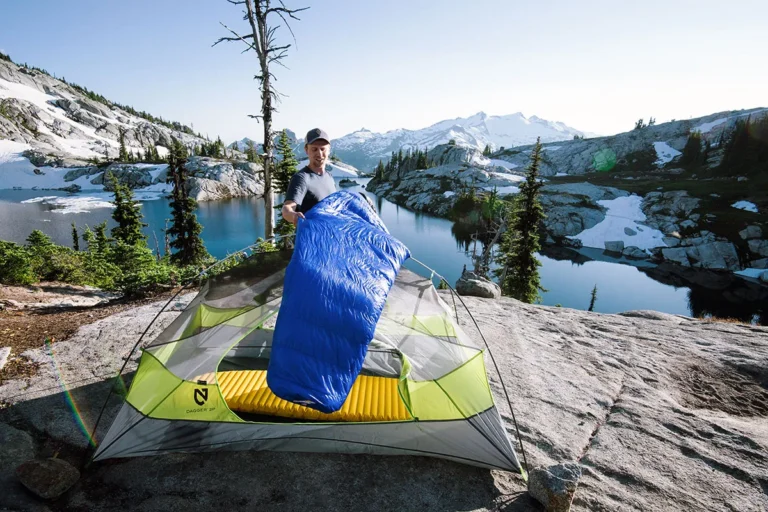
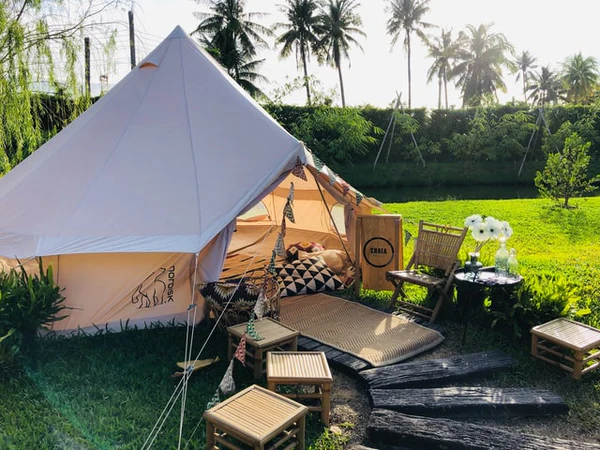
The pinnacle of luxury camping gear inthe SA is often defined by the shelter. Traditional bell tents or safari-style wall tents made from 100% cotton canvas offer a tactile and atmospheric quality that nylon cannot replicate. Canvas is naturally insulating and breathable, reducing the condensation issues common in synthetic tents. However, the trade-off is the need for meticulous drying before storage to prevent mold—a requirement that demands time and space.
Power and Connectivity: The Off-Grid Office
For many high-end users, luxury means the ability to remain connected. This has led to the rise of portable power stations with capacities exceeding 2,000Wh, capable of running induction cooktops, CPAP machines, or Starlink terminals. The shift from lead-acid to Lithium Iron Phosphate (LiFePO4) has been a game-changer, offering thousands of charge cycles and improved safety profiles.
Culinary Infrastructure: Beyond the Campfire
The high-end outdoor kitchen is no longer a single-burner stove. It involves modular titanium cookware, dual-zone portable fridge-freezers that can maintain -4°F in 100°F weather, and integrated prep stations. The focus here is on “Temperature Stability”—the ability to preserve fresh ingredients for weeks rather than days.
Detailed Real-World Scenarios
Scenario 1: The High-Altitude Autumn Basecamp
-
Constraint: Nighttime temperatures dropping to 15°F; high UV during the day.
-
Gear Selection: A poly-cotton blend tent for UV resistance, a diesel heater for dry heat, and a 0°F-rated down duvet.
-
Failure Mode: If the heater fails, the thermal mass of the canvas and the high-loft down becomes the primary survival layer. The luxury lies in the redundancy.
Scenario 2: The Coastal Expedition
-
Constraint: High humidity, salt air, and potential for gale-force winds.
-
Gear Selection: 316-grade stainless steel hardware and heavy-duty PVC flooring.
-
Second-Order Effect: Salt air corrodes standard zippers within a single season. High-end gear utilizes oversized, tooth-molded zippers that resist seizing, illustrating the “hidden” luxury of component quality.
Planning, Cost, and Resource Dynamics
The financial investment in a “full-build” luxury setup can range significantly depending on the level of permanence and technical sophistication required.
Estimated Investment Ranges (USD)
| Component | Entry-Level Luxury | Professional/Expedition Grade |
| Primary Shelter | $800 – $1,500 | $3,000 – $7,000+ |
| Power Systems | $1,000 – $2,500 | $4,000 – $10,000 |
| Sleep System (Per Person) | $300 – $600 | $800 – $1,500 |
| Kitchen/Refrigeration | $700 – $1,200 | $2,000 – $5,000 |
| Climate Control | $200 – $500 | $1,500 – $3,000 |
Opportunity Costs
Investing in high-end gear often requires a secondary investment in a vehicle capable of transporting it. The “cost” of a 150lb canvas tent is not just the price tag, but the requirement for a roof rack or a dedicated trailer. Users must weigh the benefit of comfort against the loss of spontaneity; a complex setup may take two hours to assemble, which changes the dynamic of the trip from “traveling” to “residing.”
Tools, Strategies, and Support Systems
To manage an ecosystem of high-end gear, certain strategies must be employed to ensure the equipment remains an asset rather than a burden.
-
Standardization of Power Connectors: Moving all devices to USB-C or Anderson Powerpole connectors to minimize cable clutter.
-
Modular Storage Crates: Using gasket-sealed, stackable cases (e.g., Pelican or Front Runner) to protect electronics from dust and moisture.
-
Digital Power Management: Utilizing Bluetooth-enabled shunts to monitor battery health and solar input in real-time.
-
Soft-Shell Protection: Using padded liners for high-end cookware to prevent rattling and mechanical wear during transport.
-
Moisture Control: Integrating silica gel packs or active dehumidifiers inside stored canvas tents.
-
Redundant Lighting: A mix of high-CRI (Color Rendering Index) area lights for ambiance and high-lumen tactical lights for utility.
Risk Landscape and Failure Modes
Even the most expensive equipment is subject to the laws of entropy and environmental stress. In the context of luxury camping gear USA, the risks are often “compounding.”
Taxonomy of Risks
-
Mechanical Failure: The more moving parts a piece of gear has (e.g., a folding camp kitchen), the higher the probability of a pivot point snapping under load.
-
Technical Obsolescence: High-end power stations and GPS communicators have a shelf life dictated by battery chemistry and satellite software updates.
-
Environmental Overload: A tent designed for “luxury” may have large windows for views, but these become structural weak points in a high-wind event compared to a low-profile mountaineering tent.
Compounding Risks
A failure in the power system often leads to a failure in the refrigeration system, which then leads to food spoilage. In a luxury setup, these dependencies are tightly coupled. The strategy for mitigation is “Decoupling”—ensuring that a failure in one “luxury” component does not render the entire camp uninhabitable.
Governance, Maintenance, and Long-Term Adaptation
Owning a suite of premium outdoor assets requires a “maintenance-first” mindset. Unlike cheap gear that is discarded after a break, luxury gear is designed to be repaired.
The Maintenance Checklist
-
Bi-Annual: Reapply DWR (Durable Water Repellent) coatings to synthetic fabrics.
-
Post-Trip: Clean and lubricate all zippers with paraffin wax or dedicated silicone lubricants.
-
Annual: Deep-clean canvas with specialized pH-neutral cleaners to prevent “wicking” where dirt pulls water through the fabric.
-
Storage: Batteries should be stored at 40-60% charge in a temperature-controlled environment to maximize lifespan.
Adjustment Triggers
One must know when to adapt their setup. If a user finds they are only using 20% of their power capacity, it may be time to downsize the battery for better portability. Conversely, if “setup fatigue” prevents the user from going out, the governance strategy should shift toward more permanent, vehicle-mounted solutions.
Measurement, Tracking, and Evaluation
How does one quantify the success of a high-end gear investment? It moves beyond “did I stay dry?” into more qualitative and quantitative metrics.
Leading vs. Lagging Indicators
-
Leading: Ease of setup (minutes), weight-to-utility ratio, and frequency of use. If the gear is too heavy to move, it will not be used, regardless of its cost.
-
Lagging: Total nights spent outdoors per year, lack of physical fatigue post-trip, and the resale value of the gear.
Documentation Examples
-
A “Pack List” Audit: Tracking which items were brought but never used over three consecutive trips.
-
Power Logs: Recording daily Wh consumption to size future solar arrays accurately.
-
Repair Logs: Noting recurring issues with specific brands to inform future “Buy It For Life” (BIFL) decisions.
Common Misconceptions and Oversimplifications
Myth 1: “More Expensive Equals More Durable”
While often true, some luxury gear prioritizes weight savings or aesthetics over raw durability. An ultralight titanium stove is “luxury” due to its weight, but it is far more fragile than a standard cast-iron skillet.
Myth 2: “Luxury Camping is Not ‘Real’ Camping”
This is a gatekeeping sentiment that ignores the history of outdoor exploration. Whether one sleeps on a 2-inch foam pad or a 10-inch memory foam mattress, the environmental engagement remains the same. The “realness” of the experience is defined by the interaction with the landscape, not the level of lumbar support.
Myth 3: “Setups Must Be All-Or-Nothing”
Many believe they need a $50,000 trailer to enter the high-end market. In reality, the most effective setups are incremental. Replacing a single “friction point”—like a poor-quality sleeping bag—with a high-tier alternative provides more value than buying a dozen mediocre items at once.
Ethical and Practical Considerations
In the USA, the use of high-end camping gear brings up the responsibility of “Leave No Trace” (LNT) principles. Larger setups have a larger physical footprint. A heavy canvas tent can crush vegetation more effectively than a lightweight trekking tent. High-end users must be more diligent about site selection, utilizing “hardened” surfaces to mitigate their impact.
Practically, there is also the consideration of security. A campsite filled with thousands of dollars of visible electronics and premium canvas is a higher-theft target than a basic setup. This necessitates a “security through design” approach—integrated locks, GPS trackers on trailers, and a general policy of discretion regarding equipment visibility in high-traffic areas.
Conclusion
The evolution of luxury camping gear in the SA reflects a broader cultural desire to reconnect with the natural world without abandoning the progress of the modern era. It is a field defined by a paradox: using advanced technology to facilitate a primitive experience. Success in this domain is not found in the acquisition of the most expensive items, but in the curation of a system that works in harmony with the environment and the user’s specific needs.
As materials continue to advance—moving toward even more efficient solar capture and lighter, stronger textiles—the boundary between “home” and “wilderness” will continue to blur. However, the core principle remains: the best gear is the gear that disappears into the background, allowing the landscape to take center stage. Intellectual honesty in this market requires acknowledging that while comfort is a valid pursuit, the ultimate goal of any outdoor equipment is to provide a safe, reliable, and restorative conduit to the world beyond the walls.